Jugar, tocar or poner? The chart
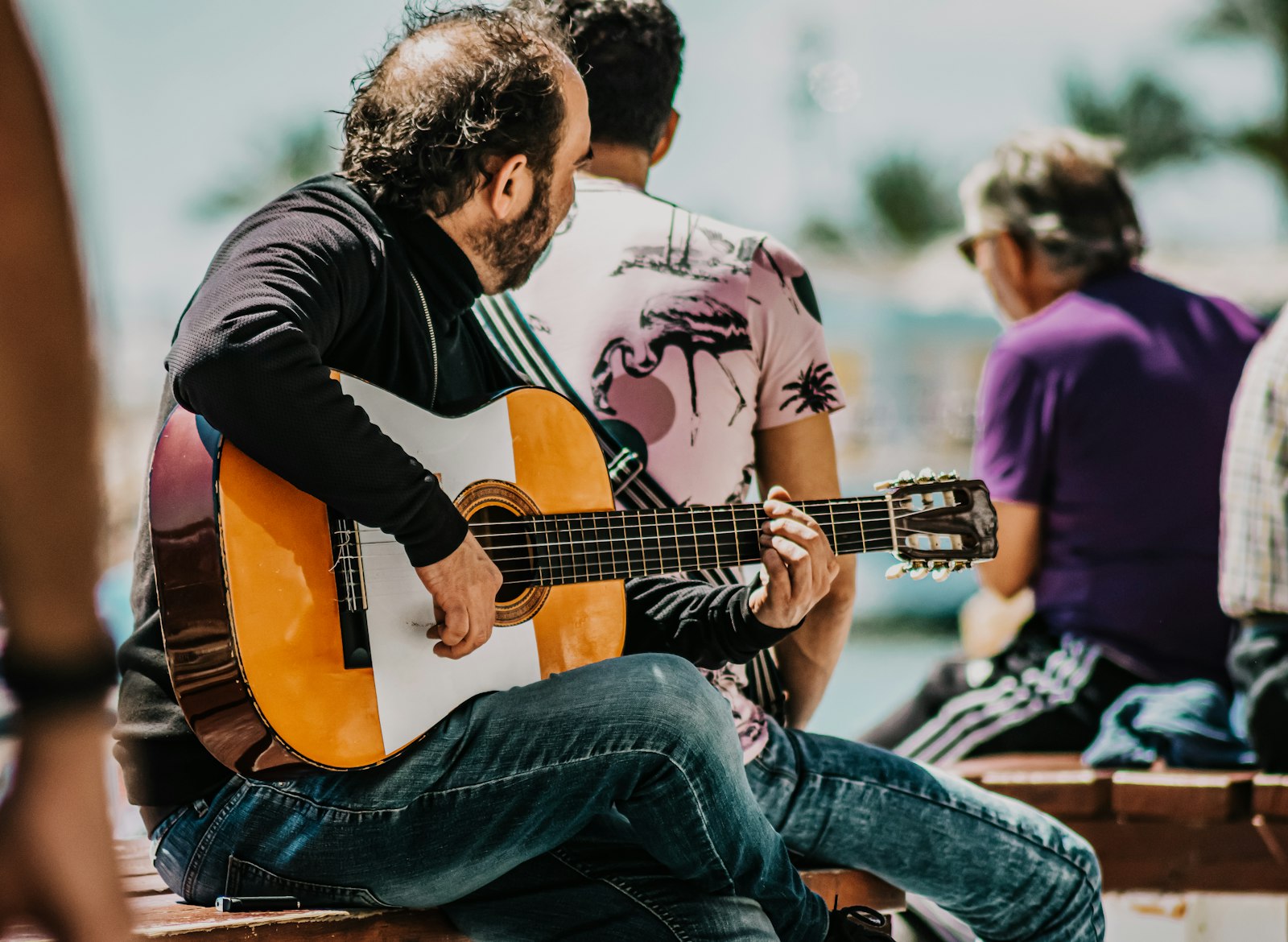
Ask what is being played. A game or a sport — el fútbol, el tenis, las cartas, el ajedrez — is jugar, and so is playing for fun: los niños juegan en el parque. An instrument is tocar: tocar la guitarra, tocar el piano. Music, a song, the radio or the television on a machine is poner — the way you put the radio on — and a film or a play that is on is poner too: ¿qué ponen hoy?
A quick test settles most of them: a game you could win is jugar; a musician's hands make it tocar; a machine makes it poner.
| English | Spanish | Example |
|---|---|---|
| play (a game, a sport) | jugar (a) | Juego al tenis los sábados. — I play tennis on Saturdays. |
| play (a match) | jugar | ¿Jugamos un partido de tenis? — Shall we play a game of tennis? |
| play (for fun) | jugar (con) | El niño quiere jugar con sus amigos. — The boy wants to play with his friends. |
| play (an instrument) | tocar | Toco la guitarra. — I play the guitar. |
| play (music, the radio) | poner | Pon la radio. — Put the radio on. |
| play (a film: what's on) | poner | ¿Qué ponen en el cine? — What's on at the cinema? |
Jugar: games, sports and matches
In careful Spanish the game takes a and its article: juego al fútbol, jugamos a las cartas, ¿jugamos al ajedrez? In everyday speech across much of the Americas, jugar also goes straight before the game, with no a and no article — juega fútbol, jugar cartas — and the academies say that use, rooted in American Spanish, has to be considered valid. What they do not accept is keeping the a and dropping the article: jugar a fútbol, which they trace to Catalan.
A match or a round can be the object: jugar un partido, jugar una partida de cartas. Jugar con is playing with something — a toy, a pen, the cutlery — or toying with someone: no juegues con él. Jugarse is risking: se jugó todos sus ahorros, se juega la vida.
Jugar changes its u to ue when the stress falls on it: juego, juegas, juega, juegan — but jugamos, jugáis, and jugás with vos. Before an e the g becomes gu: jugué, juegue, juguemos. It is the only verb with that change; stem-changing verbs has the rest of the family.
| English | Spanish |
|---|---|
| I play football. | Juego al fútbol. |
| Shall we play chess? | ¿Jugamos al ajedrez? |
| She plays cards with her friends. | Juega a las cartas con sus amigas. |
| Madrid play Barcelona on Sunday. | El Madrid juega contra el Barça el domingo. |
| Stop playing with your cutlery. | Deja de jugar con los cubiertos. |
| He's risking his life. | Se está jugando la vida. |
Tocar: instruments, touch, and your turn
Tocar starts as touch — no toques eso, me tocó la espalda — and playing an instrument grows from it: tocar la guitarra, tocar el piano, tocar en un grupo. A bell or a doorbell is tocado too (toqué el timbre), and so is a piece of music played on an instrument: el pianista tocará una pieza de Ravel.
Tocar also says something falls to you. With the person as me, te or le, it is your turn or your job: te toca, a ti te toca decidir, ¿a quién le toca fregar? It is a prize that falls to you: me tocó la lotería, le han tocado cien millones en la lotería. And with no person, it is what is scheduled: mañana toca el examen teórico.
So the lottery takes both verbs: jugar is buying the ticket — juego dos décimos de la lotería, in the dictionary's example — and tocar is winning.
| English | Spanish |
|---|---|
| I play the piano. | Toco el piano. |
| The pianist will play a piece by Ravel. | El pianista tocará una pieza de Ravel. |
| I rang the doorbell. | Toqué el timbre. |
| Don't touch that. | No toques eso. |
| It's your turn to decide. | A ti te toca decidir. |
| The theory exam is tomorrow. | Mañana toca el examen teórico. |
| She won a hundred million in the lottery. | Le han tocado cien millones en la lotería. |
Poner: music, the radio and what's on
Poner is making something work — the dictionary's own example is poner la radio — so it is the verb for music, a song, the radio or the television: pon algo de música, ¿me pones esa canción otra vez?
A film or a play that is on is poner as well, in the plural with no subject: ¿qué ponen en el cine?, ¿qué ponen hoy en la tele? The dictionary lists echar, dar and pasar for the same thing: ¿qué echan?, ¿qué dan?
A song can be played both ways: a band plays it on its instruments (la toca), a DJ plays the record (lo pone). So poner and tocar can both play a song — the machine or the musician decides which.
| English | Spanish |
|---|---|
| Put some music on. | Pon algo de música. |
| Put the radio on. | Pon la radio. |
| Can you play that song again? | ¿Puedes volver a poner esa canción? |
| What's on at the cinema tonight? | ¿Qué ponen esta noche en el cine? |
| Put the TV on. | Pon la tele. |
Play a role: hacer, desempeñar or jugar un papel?
For a part in a film or a play, and for a role in a project, Spanish has its own verbs: hacer, desempeñar and representar — hizo el papel de la madre, desempeña un papel importante. Jugar un papel is an old copy of French jouer un rôle and English play a role; the academies say it is now so rooted in careful Spanish that it cannot be censured, but recommend the other three first. Without its article — jugar papel — it is not accepted.
Why do English speakers mix them up?
Because English has one verb, play, for all of it, and the first one a dictionary gives — jugar — is right only for games and sports. The slips follow: juego la guitarra for toco la guitarra, jugar una canción for poner una canción, and ¿qué juegan en el cine? for ¿qué ponen?
There is no first-party error rate on this page yet: our mistake tagger counts ser vs estar, por vs para, the tenses and the object pronouns, not verbs like these. When it does, the number will sit here. Until then the quiz is the measure.
What comes after jugar, tocar and poner?
Salir, irse or dejar is another English verb Spanish says three ways: leave. Tiempo, vez or hora is the word English says once and Spanish three times: time. Pedir vs preguntar is ask, and llevar vs traer take and bring. Si clauses are where tocar meets the subjunctive: si tuviera más tiempo, aprendería a tocar el piano. The free Spanish level test places you on the A1–C2 scale in five minutes; A2 vs B1 Spanish says what changes after the first levels.